Satellites
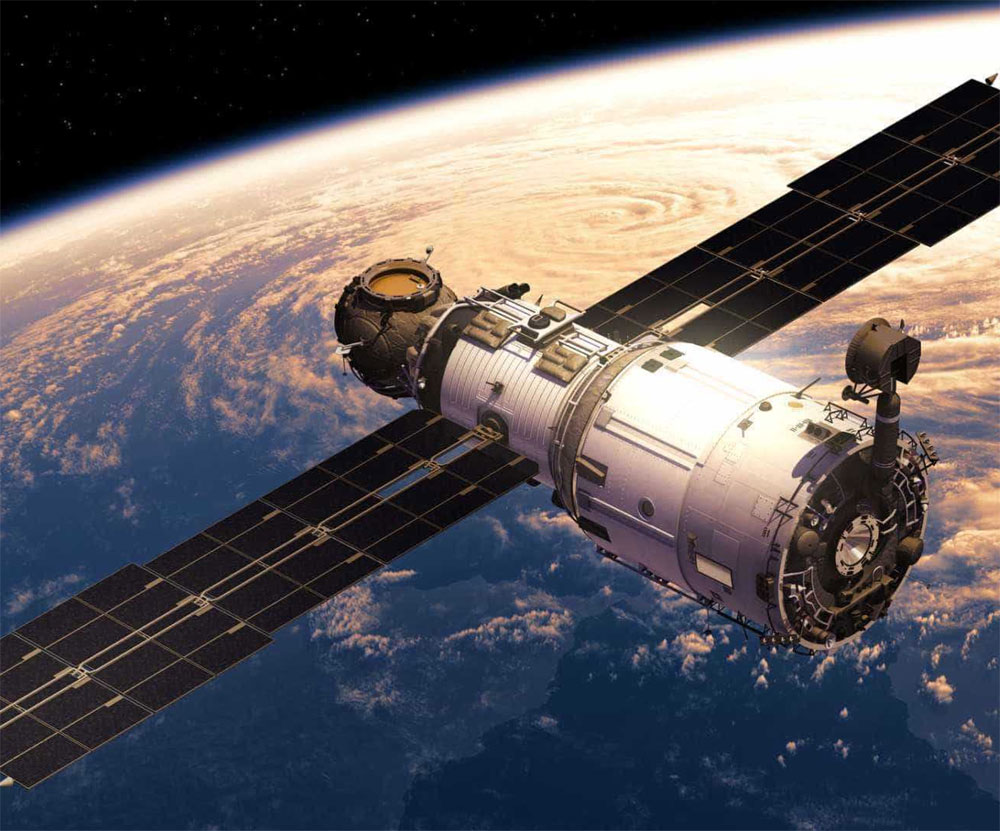
A satellite is an object that moves in a curved path around a planet. Satellites are very complex machines that require precise mathematical calculations in order for them to function. The satellite has tracking systems and very sophisticated computer systems on board.
The word “satellite” is more general than that: it means a smaller, space based object moving in a loop around a larger object. The main components of a satellite consists of the communications system, which includes the antennas and transponders that receive and re transmit signals, the power system, which includes the solar panels that provide power, and the propulsion system, which includes the rockets that propel the satellite. Satellites operate in extreme temperatures from -150° C to 150° C and may be subject to radiation in space. A satellite’s thermal system protects its sensitive electronic and mechanical components and maintains it in its optimum functioning temperature to ensure its continuous operation.
One of the most important things about satellites is the very different paths they follow at very different heights above Earth. Left to its own devices, a satellite fired into space might fall back to Earth just like a stone tossed into the air. There are many types of satellite orbits, but there are three basic varieties, low, medium, and high – which are short, medium, and long distances above Earth, respectively.
Scientific satellites are quite close to Earth, often just a hundred kilometers up – and follow an almost circular path called a low – Earth orbit. Since they have to be moving very fast to overcome Earth’s gravity, and they have a relatively small orbit, they cover large areas of the planet quite quickly and never stay over one part of Earth for more than a few minutes.
The higher up a satellite is the longer it spends over any one part of Earth. A medium – Earth orbit is about 10 times higher up than a LEO.
Many satellites have orbits at a carefully chosen distance of about 36.000 km from the surface. This position ensures they take exactly one day to orbit Earth and always return to the same position above it, and the same time of day. A high-Earth orbit like this is called geosynchronous or geostationary.
We hope you enjoy our articles. Follow us fine more interesting topics. Thank you for your time and consideration.
Best Regards,
TCO team